
 中国
 India
 Việt nam
 Australia
 대한민국
 پاکستان
 ประเทศไทย
 Filipino
 Malaysia
 Bangladesh
 Sri Lanka
 Indonesia
 Узбекистан
 Ireland
 Česká republika
 Türkiye
 United Kingdom
 France
 Deutschland
 Nederland
 España
 Sverige
 Italia
 Polska
 Україна
 Português
 България
 Magyarország
 Lietuva
 Ελλάδα
 Suomen tasavalta
 United States
 Canada
 México
 Brasil
 República de Chile
 South Africa
 المملكة العربية السعودية
 الجمهورية اللبنانية
 امارات عربية متحدة
 اليمن
 المملكة الأردنّيّة الهاشميّة
 جمهورية مصر العربية
 la République Tunisienne
 Kenya
 Tanzania
 Nigeria
 Other Countries and Regions
Why Add Energy Storage to an Existing Commercial PV System?
Key Takeaways
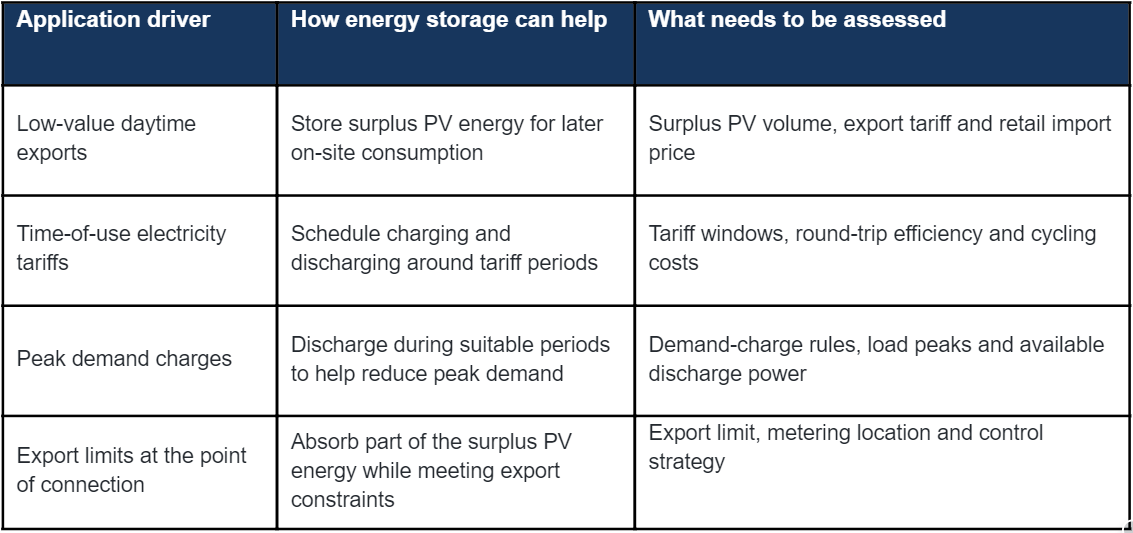
●Solar generation and a business's electricity demand do not always occur at the same time. The value of surplus PV energy depends on the local tariff structure, load profile and grid-export requirements.
●AC coupling provides a practical retrofit pathway for adding energy storage to an operating PV system while retaining the existing PV inverters, subject to site and equipment compatibility.
●The value of storage can extend beyond time-of-use arbitrage. It may also increase PV self-consumption, reduce low-value grid exports and support peak-demand management.
●A sound investment decision starts with actual PV generation, site load, export settlement, electricity import prices and grid-connection conditions—not a generic payback assumption.
1. What Challenges Do Existing Commercial PV Systems Face?
Many commercial and industrial (C&I) PV systems are already operating reliably. However, solar generation is typically concentrated during daylight hours, while a facility's electricity demand may continue into the evening or vary throughout the day. When PV output exceeds on-site consumption, the surplus must be exported to the grid or curtailed, depending on the site's grid-connection agreement. When PV generation falls, the facility may need to import electricity from the grid.
This does not mean that surplus PV electricity has no value. Its economic value depends on the local electricity market, export compensation arrangements and applicable incentives. However, when the export tariff is lower than the retail electricity price—or when zero-price, negative-price or export-limitation periods apply—business owners may need to reassess how surplus solar energy is used.
2. How Can Energy Storage Improve the Value of Existing PV Generation?
When suitable charging conditions are available, a battery energy storage system (BESS) can store part of the PV energy that cannot be consumed immediately on site and discharge it later when the facility needs electricity. This process is known as energy time-shifting. It is a common way to increase PV self-consumption and reduce grid electricity imports.
3. Why Is AC Coupling Suitable for Retrofitting Existing PV Systems?
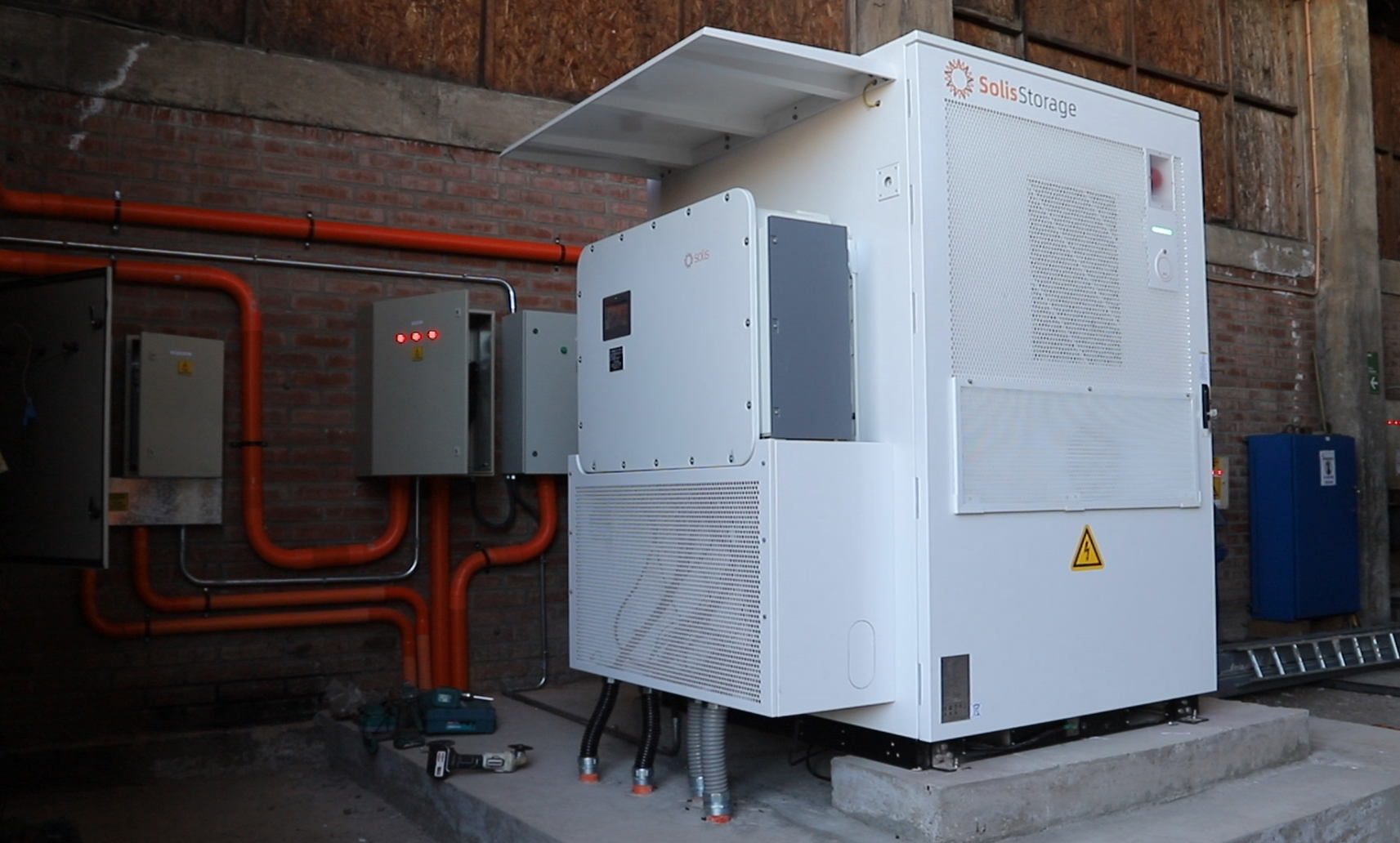
AC coupling adds an energy storage system on the AC side of an existing PV installation, rather than directly modifying the DC connection between the PV modules and the original grid-tied PV inverter. For an operating site, this approach can often retain the existing PV modules and grid-tied inverters, allowing the PV system to continue generating electricity while storage is added.
●Retain existing PV assets: the original PV inverters generally do not need to be replaced, reducing changes to the operating generation system.
●Limit disruption during installation: work is typically focused on the storage connection, metering and associated AC distribution connections. Careful planning can help minimise disruption to facility operations.
●Reduce the extent of electrical modifications: major changes to the existing switchboard may not be required in many suitable applications, although this depends on the site's electrical configuration.
●Address grid-connection requirements: the storage system's connection, metering and control functions must comply with local grid codes and utility requirements. A connection notification, amendment or approval may be required.
Whether a shutdown is required, the switchboard needs modification or a new grid-connection approval is necessary depends on the existing electrical topology, equipment ratings and local requirements. These points should be assessed during project design.
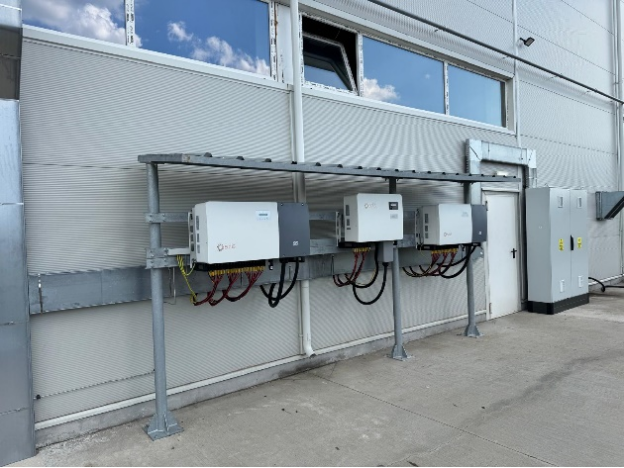
At factories, farms and industrial parks with multiple rooftops or buildings, several PV sources may feed into different parts of the AC distribution network before converging at the point of common coupling (PCC). The system design must therefore define how PV generation, battery charging and discharging, site load and grid power are measured and coordinated.

Figure 1. Distributed PV installations across multiple buildings in a typical C&I site.
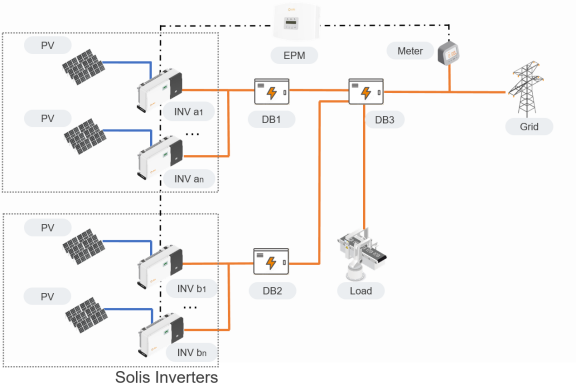
Figure 2. Typical arrangement in which multiple PV feeders converge at the site's main grid connection point.
4. How Should the Economics of a PV Retrofit with Storage Be Evaluated?
A robust business case compares achievable electricity-cost savings with the total investment, operating costs and energy losses. It should not be based on the theoretical peak-to-off-peak tariff spread alone.
1.Collect PV generation, facility load and grid-import/export data over a representative operating period. Hourly data—or finer time intervals where available—will provide a more useful basis for analysis.
2.Review the applicable electricity import tariff, export compensation, demand-charge structure and any relevant zero-price or negative-price settlement rules.
3.Model different storage power and energy-capacity configurations based on available surplus PV energy, the site's load profile and the system's efficiency.
4.Include equipment, installation, metering and electrical modification costs, as well as operation and maintenance, conversion losses and battery degradation, to estimate annual net cash flow and project payback.
For sites subject to export limits or zero-export requirements, control capability and grid-code compliance must be treated as design constraints from the outset. Storage capacity should not be selected on the basis of theoretical energy savings alone.
5. Is an Existing PV Site a Good Candidate for a Storage Assessment?
●Is there a consistent and measurable amount of surplus PV generation during the day?
●Is there an economic difference between the export compensation and the facility's electricity import price?
●Does the site have high-tariff consumption periods or a clear need for peak-demand management?
●Does the existing electrical infrastructure provide a suitable location for storage integration and metering?
If these conditions indicate potential value, the next step is to build a project-specific energy and financial model using actual operating data before determining the appropriate storage power and capacity.
Frequently Asked Questions
Q: Does adding storage to an existing PV system always require replacing the original PV inverter?
A: No. An AC-coupled solution can retain the existing grid-tied PV inverter where the equipment, system topology and grid-connection requirements are compatible.
Q: Will energy storage always increase project profitability?
A: Not necessarily. The outcome depends on the volume of energy that can be shifted, electricity tariffs, system efficiency, investment costs and the operating strategy. A project-specific assessment is required.
Q: Does AC coupling mean that installation can be completed without a power shutdown?
A: Not in every case. Electrical connections and metering work may require a temporary shutdown. This should be confirmed in the site-specific installation plan.
In Part 2, we examine the four typical retrofit scenarios and explain how to select the appropriate connection and control strategy based on the existing PV inverter brand and grid-export requirements.
2026-11-21 13:22:00.0


Get the latest news of Ginlong at the first time
Asia/Pacific
Europe
North America
South America
Middle East and Africa
Other Countries and Regions